Custom vs platform

You paid a web company. So why is your site still built on Wix?

Custom-looking is not the same as custom-built. Here is what changes when the company you hired builds your website inside a third-party platform, and five questions to ask before you sign anything.

4 min read 7-slide carousel
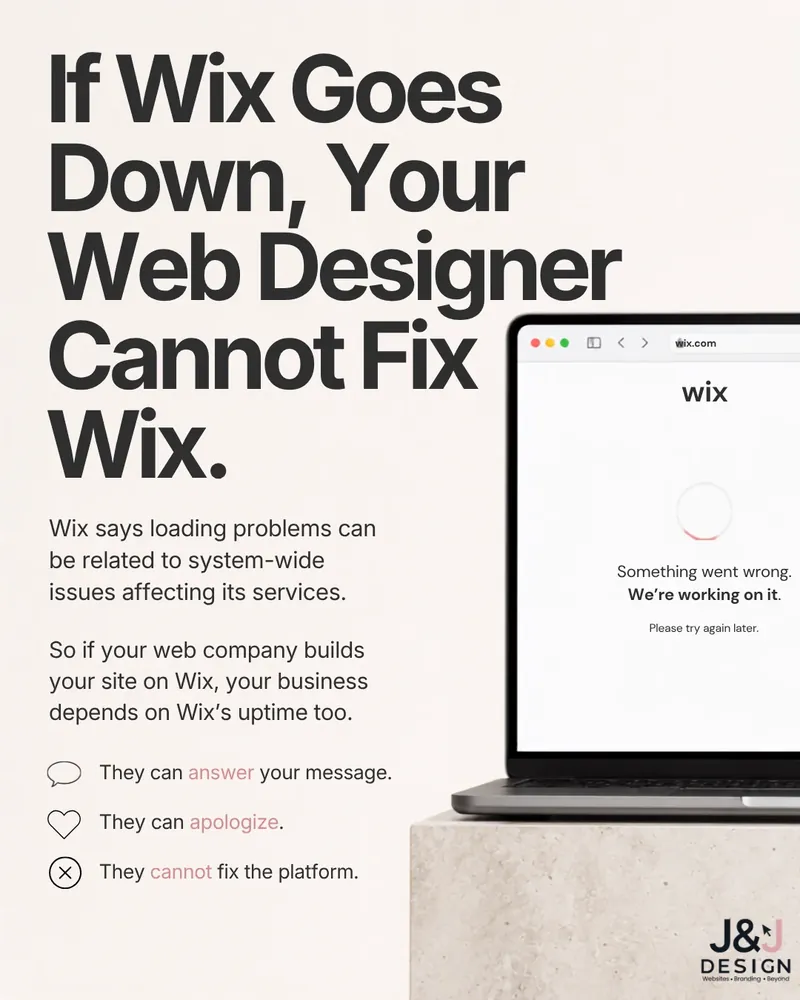
Slide: If Wix goes down, your web designer cannot fix Wix. A laptop shows a Wix error page reading Something went wrong. They can answer your message and apologize, but cannot fix the platform.

Plenty of small businesses pay a web company a custom-website price and assume that is what they got. Then, months or years later, they find out the site lives inside Wix or another drag-and-drop builder, with a subscription they never really understood.

That is not automatically a disaster. Builders like Wix are genuinely useful for people who want to make a site themselves. The problem is paying for custom work and receiving a customized template without being told the difference. This carousel from our Instagram walks through why that difference matters. Below, we go through it slide by slide.

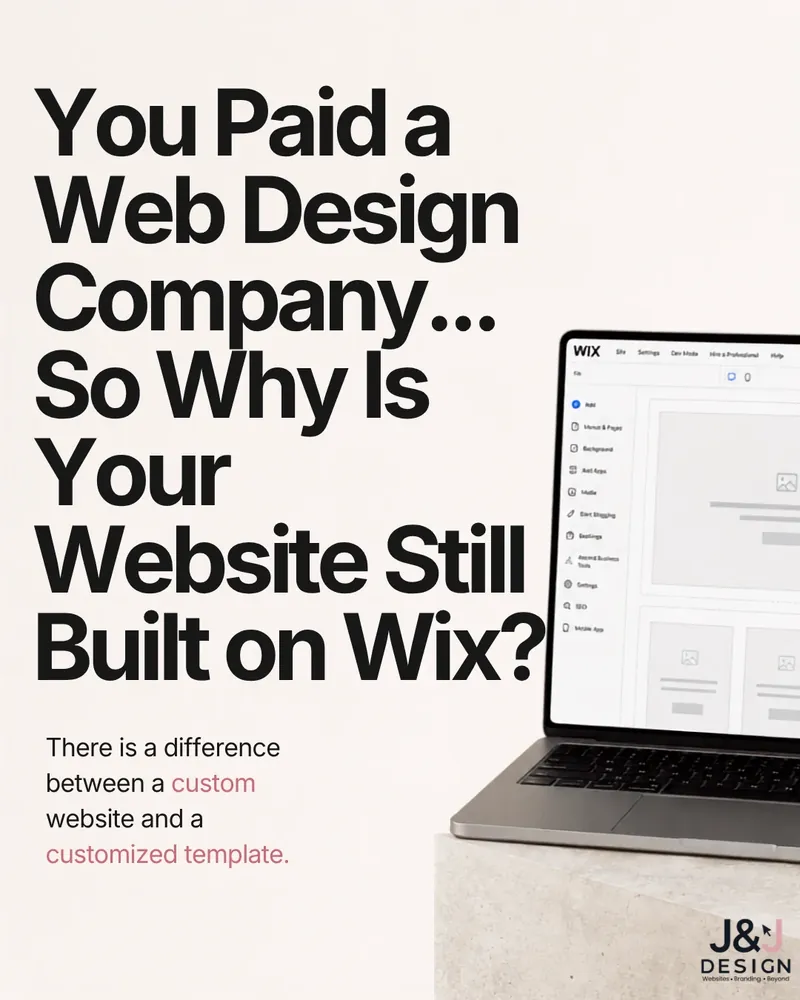
Carousel cover: You paid a web design company, so why is your website still built on Wix? A laptop shows the Wix editor.
Slide 1 of 7

There is a difference between a custom website and a customized template

A customized template starts as someone else's design: a layout picked from a library, with your logo, colours and photos dropped in. A custom website starts from your business. The layout, code and structure are written for what you do and who you serve.

Both can look good in a screenshot. They behave very differently once you need your site to grow, move, load quickly or rank in Google.
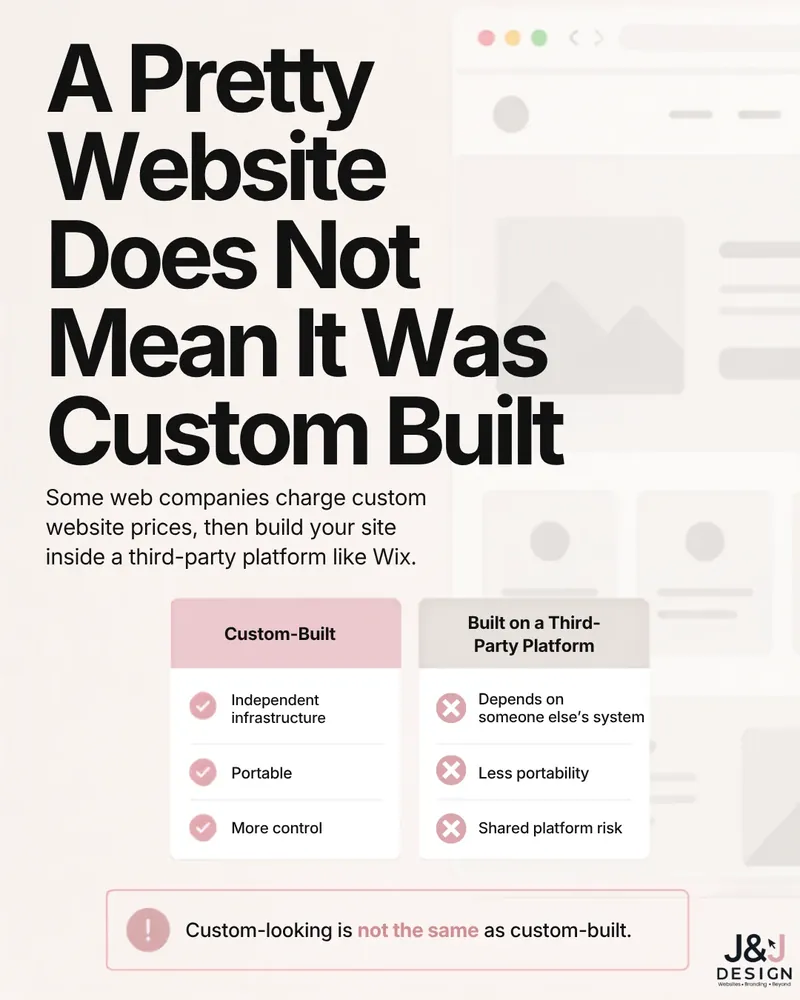
Slide comparing a custom-built website (independent infrastructure, portable, more control) with one built on a third-party platform (depends on someone else's system, less portability, shared platform risk).
Slide 2 of 7

A pretty website does not mean it was custom built

Some web companies charge custom-website prices, then build your site inside a third-party platform like Wix. From the outside you cannot tell. The difference shows up underneath:

  • Custom-built: independent infrastructure, portable, and more control.
  • Built on a third-party platform: depends on someone else's system, less portable, and exposed to shared platform risk.

Custom-looking is not the same as custom-built.

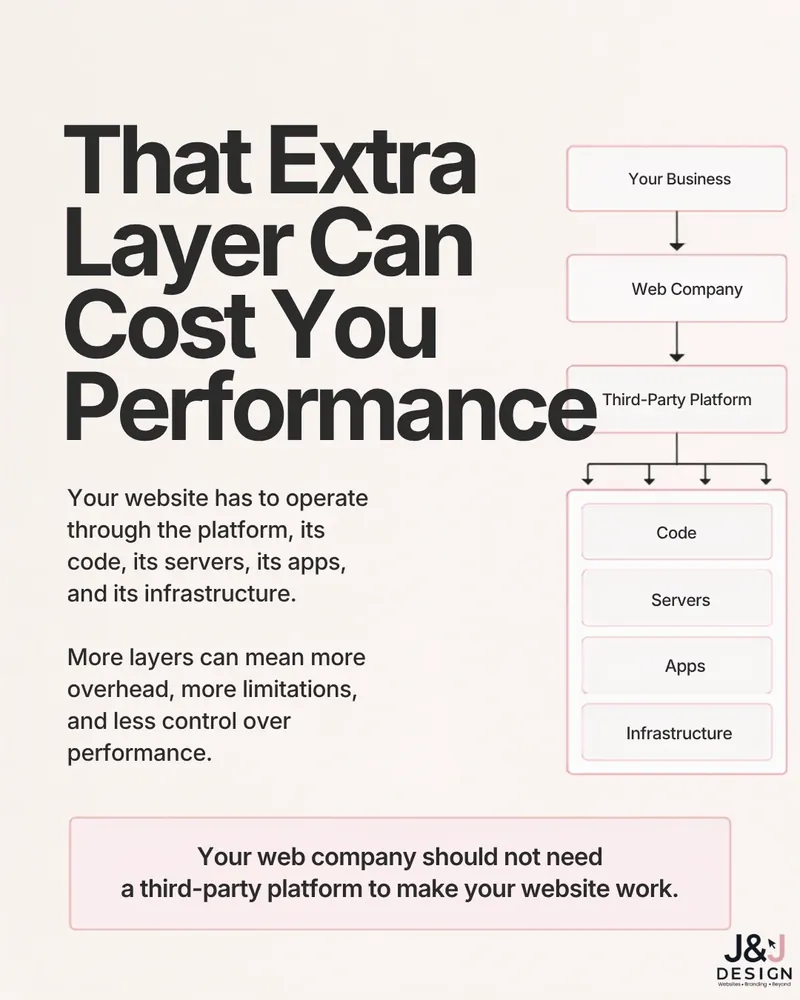
Slide: That extra layer can cost you performance. A diagram runs from your business to the web company to the third-party platform and its code, servers, apps and infrastructure.
Slide 3 of 7

That extra layer can cost you performance

When your site is built on a platform, it has to run through that platform: its code, its servers, its apps and its infrastructure. Your business sits at the top of a chain, with your web company below it, then the platform, then everything the platform loads on every page.

More layers can mean more overhead, more limitations and less control over speed. Speed is not a nice-to-have. Visitors leave slow pages, and Google looks at page experience when it ranks results. That is why we hand-code every site, serve it from our own AWS-backed hosting, and treat load time as part of our SEO setup.

Your web company should not need a third-party platform to make your website work.

Slide: If Wix goes down, your web designer cannot fix Wix. A laptop shows a Wix error page reading Something went wrong. They can answer your message and apologize, but cannot fix the platform.
Slide 4 of 7

If Wix goes down, your web designer cannot fix Wix

Wix itself says loading problems can be related to system-wide issues affecting its services. So if your web company builds on Wix, your business depends on Wix's uptime too.

When that happens, your web company can answer your message. They can apologize. What they cannot do is fix the platform. You wait, along with every other site on it.

With a hand-coded site on independent hosting, there is no platform in the middle. The people who built it can get into the code and the hosting themselves.

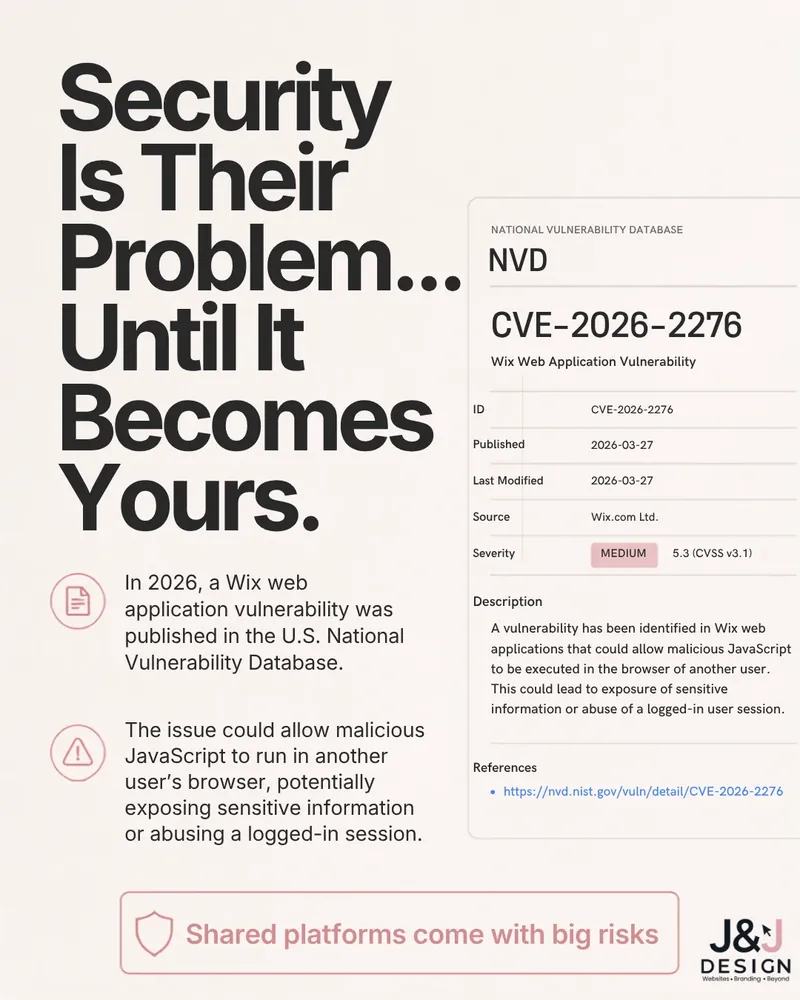
Slide: Security is their problem until it becomes yours. It cites CVE-2026-2276, a Wix web application vulnerability listed in the U.S. National Vulnerability Database.
Slide 5 of 7

Security is their problem, until it becomes yours

Shared platforms are big targets, and when a flaw is found, every site on the platform shares the exposure. In February 2026 a Wix web application vulnerability was published in the U.S. National Vulnerability Database as CVE-2026-2276. According to the entry, it could allow malicious JavaScript to run in another user's browser, potentially exposing sensitive information or abusing a logged-in session.

To be fair to Wix, every platform has vulnerabilities, and large companies patch them. The point is who is in control. On a shared platform the fix happens on their schedule, and you find out when they tell you. A static, hand-coded site has far less to attack in the first place: no plugin marketplace, no shared admin dashboard and no database behind the public pages.

Shared platforms come with shared risks.

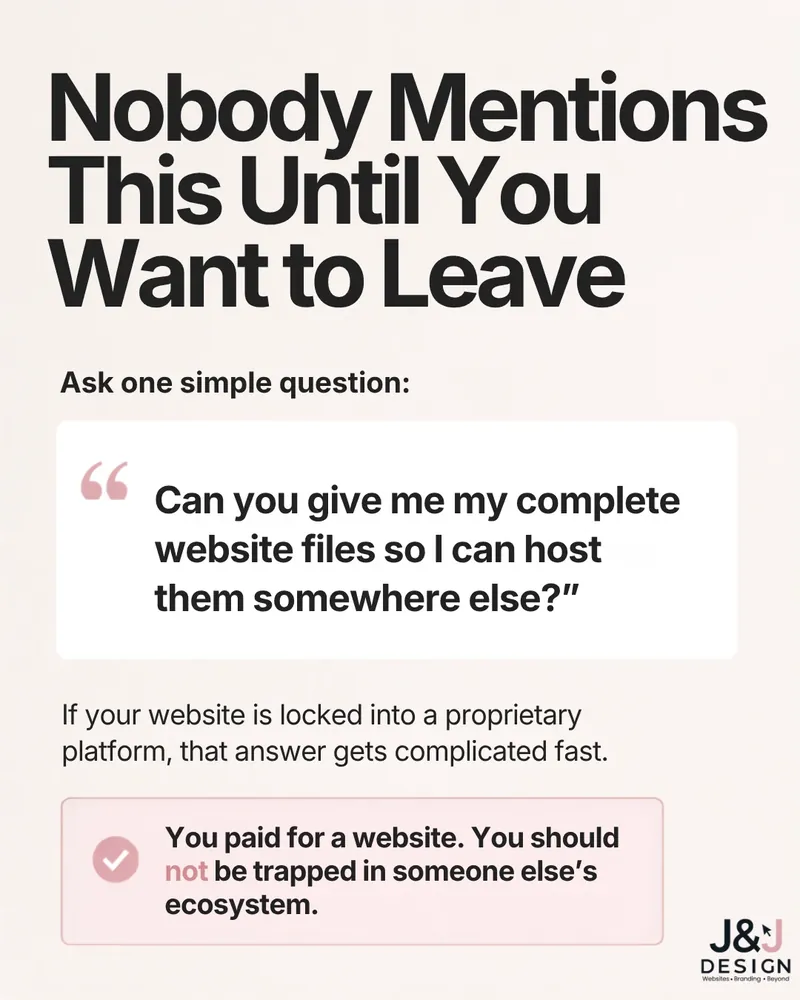
Slide: Nobody mentions this until you want to leave. Ask one simple question: can you give me my complete website files so I can host them somewhere else?
Slide 6 of 7

Nobody mentions this until you want to leave

Ask your web company one simple question: “Can you give me my complete website files so I can host them somewhere else?”

If your website is locked into a proprietary platform, that answer gets complicated fast. You can usually take your text and images, but the design, layout and structure stay behind, and moving means rebuilding.

Every site we build is plain HTML, CSS and JavaScript, and you own your website files outright. If you ever want to move it, the files go with you.

You paid for a website. You should not be trapped in someone else's ecosystem.

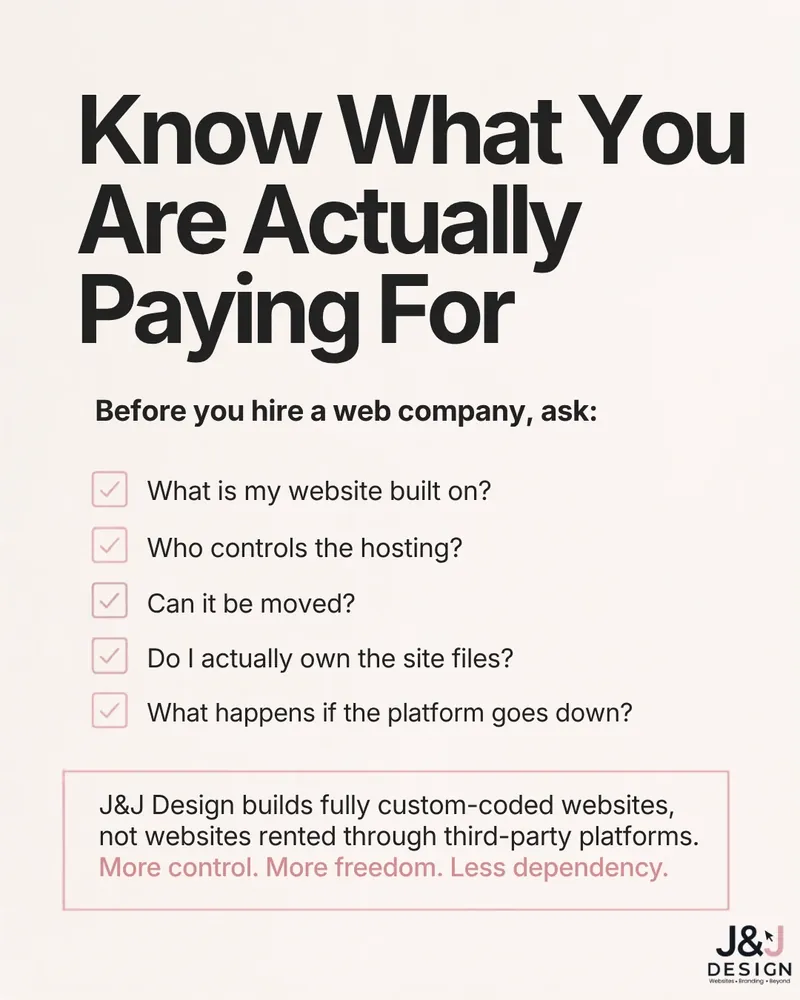
Checklist slide: before you hire a web company, ask what is my website built on, who controls the hosting, can it be moved, do I actually own the site files, and what happens if the platform goes down.
Slide 7 of 7

Know what you are actually paying for

Before you hire a web company, ask:

  • What is my website built on?
  • Who controls the hosting?
  • Can it be moved?
  • Do I actually own the site files?
  • What happens if the platform goes down?

Good answers are specific. “It is hand-coded, hosted on AWS, and yes, the files are yours” is a good answer. “Don't worry about that” is not.

J&J Design builds fully custom-coded websites, not websites rented through third-party platforms. More control. More freedom. Less dependency.

So is Wix ever the right choice?

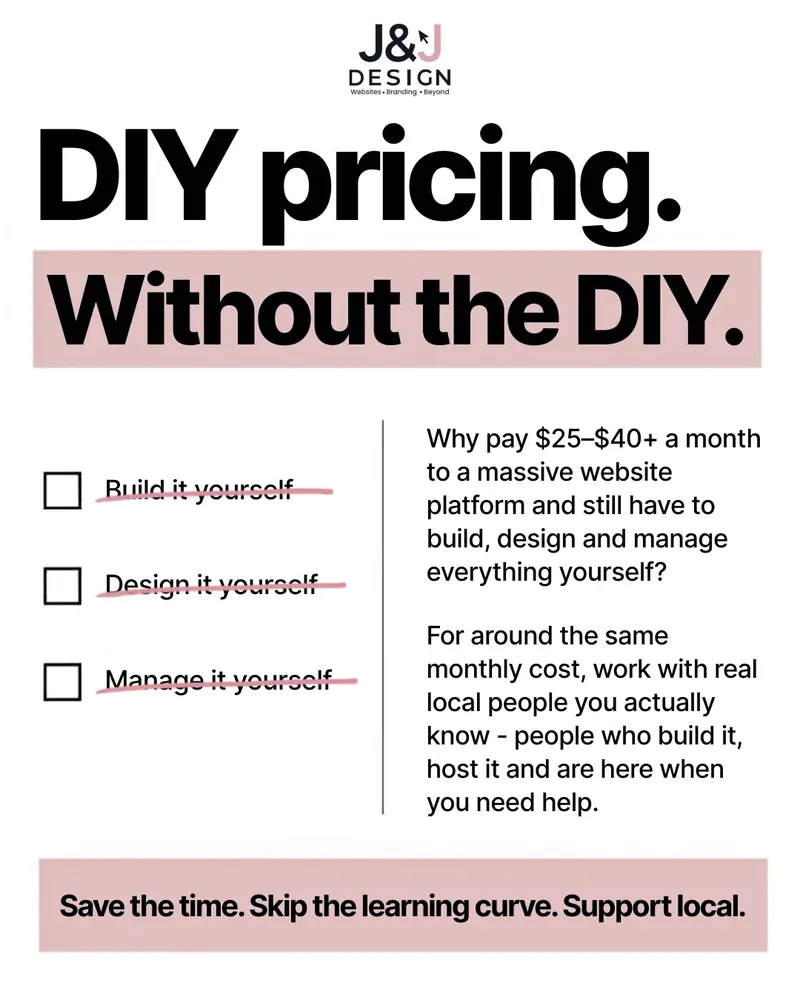
Yes. If you want to build and manage a site yourself, a builder is a reasonable tool, and we will happily tell you so. The issue is paying for a professional, custom build while the platform underneath is never mentioned. If you are weighing the monthly cost of doing it yourself, we compared the big four in what website builders really cost.

Not sure what your current site is built on? Send us the address and we will take a look during a free consultation, in plain language.

The short version

Three things to remember.

  1. Custom-looking isn't custom-built. Ask what your site is actually built on before you pay a custom price.
  2. Platforms add a layer you can't control. Speed, outages and security fixes all happen on their schedule.
  3. Ownership matters. Make sure you can take your complete website files with you.
Keep reading

More straight talk from our feed.

Want a website that is actually yours?

Hand-coded, hosted, and fully yours.

We design and build custom websites for small businesses, host them on AWS-backed infrastructure and hand you the keys. Tell us about your business and we will quote it up front.