
Social media

Social media stats every business owner needs to hear

Your customers aren't a “maybe” on social media. They are already there: searching, comparing and deciding who to buy from. Here are the numbers, and what they mean for a small business.

4 min read 8-slide carousel
Note card: social media is no longer just a place people go to scroll. It's where they discover brands, research products, compare options, build trust and decide who feels worth buying from.

“Social media isn't really a priority for us right now” is one of the most common things we hear from small business owners, usually from businesses that are excellent at what they do. This carousel is our answer.

Every figure below comes straight from the slides, with the source named wherever the slide names one. We added what each number means in practice for a local business.

Carousel cover: If you're a business or brand owner, I need you to hear this. A note card on a blush envelope beside a laptop and coffee.
Slide 1 of 8

If you're a business or brand owner, I need you to hear this.

Social media has quietly changed jobs. It is no longer just where people scroll between other things. It has become a search engine, a review site and a shop window, all at once.

If your business isn't showing up there, you are missing the moment customers are making up their minds.
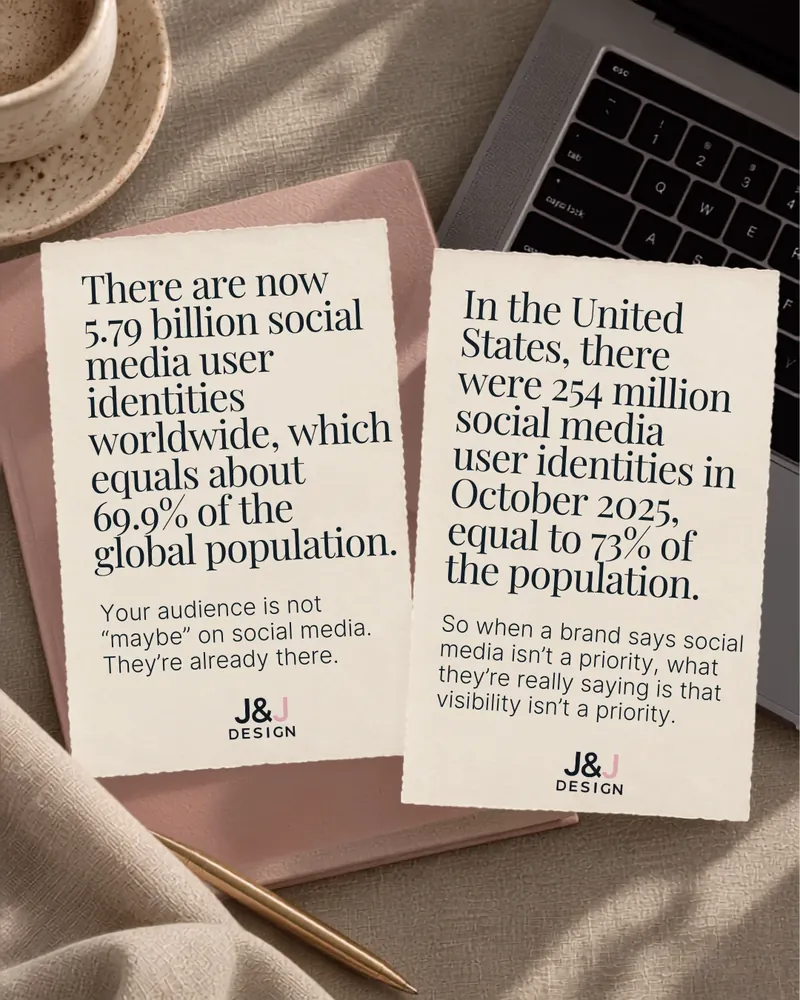
Two note cards: there are now 5.79 billion social media user identities worldwide, about 69.9% of the global population, and in the United States there were 254 million in October 2025, equal to 73% of the population.
Slide 2 of 8

Your audience is already there

There are now 5.79 billion social media user identities worldwide, about 69.9% of the global population. In the United States there were 254 million social media user identities in October 2025, equal to 73% of the population.

Your audience is not a “maybe” on social media. So when a brand says social media isn't a priority, what it is really saying is that visibility isn't a priority.

Your audience is not "maybe" on social media. They're already there.

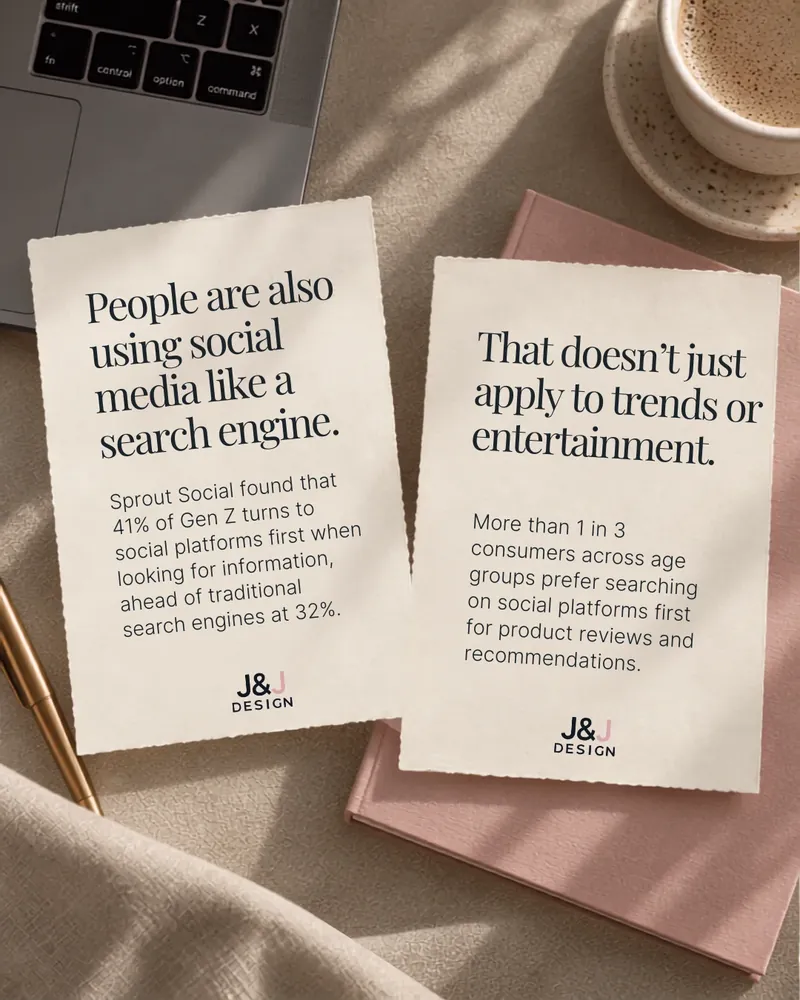
Two note cards: people are using social media like a search engine. Sprout Social found 41% of Gen Z turn to social platforms first for information, ahead of search engines at 32%, and more than 1 in 3 consumers prefer searching social for reviews.
Slide 3 of 8

People are using social media like a search engine

Sprout Social found that 41% of Gen Z turn to social platforms first when looking for information, ahead of traditional search engines at 32%. And it is not just trends or entertainment: more than 1 in 3 consumers across age groups prefer searching social platforms first for product reviews and recommendations.

That does not make Google less important. It means people check you out in both places. Your search presence and Google Business Profile get you found. Your social presence is often what convinces people you are real, active and worth contacting.

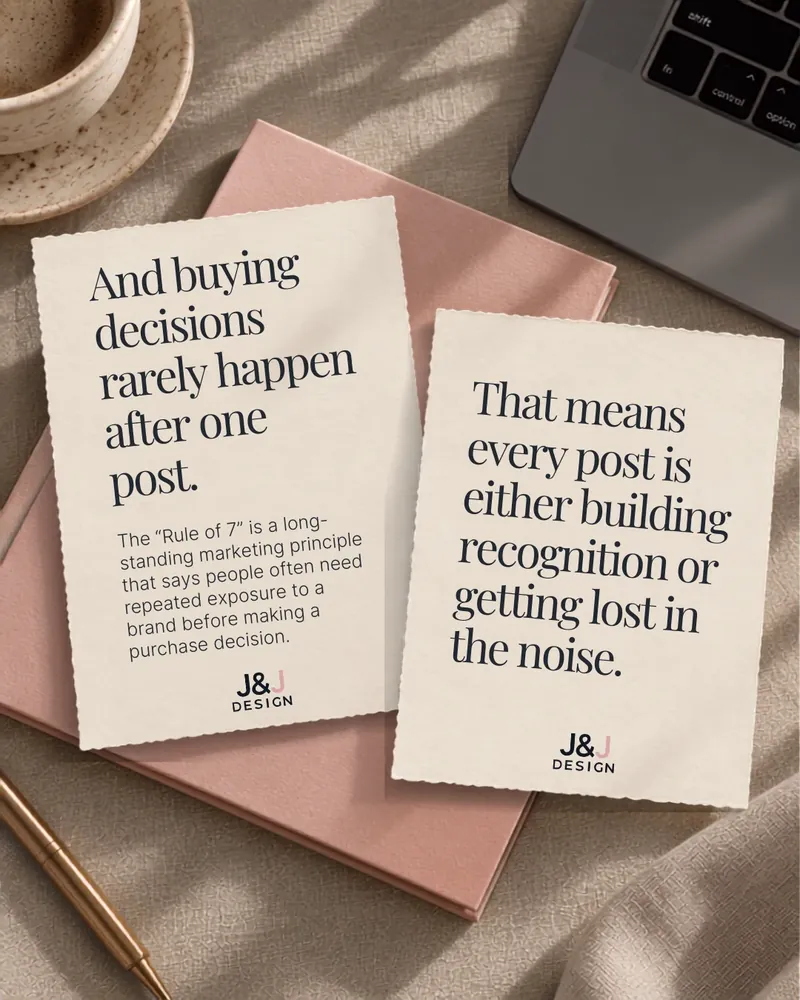
Two note cards: buying decisions rarely happen after one post. The Rule of 7 says people often need repeated exposure before buying, so every post is either building recognition or getting lost in the noise.
Slide 4 of 8

Buying decisions rarely happen after one post

The “Rule of 7” is a long-standing marketing principle that says people often need repeated exposure to a brand before making a purchase decision. The exact number matters less than the idea: familiarity builds over time.

That means every post is either building recognition or getting lost in the noise. Consistent colours, a recognizable style and a steady rhythm are what make the second, third and seventh exposure add up. It is why we design branded social media content as a system rather than one-off graphics.

Every post is either building recognition or getting lost in the noise.

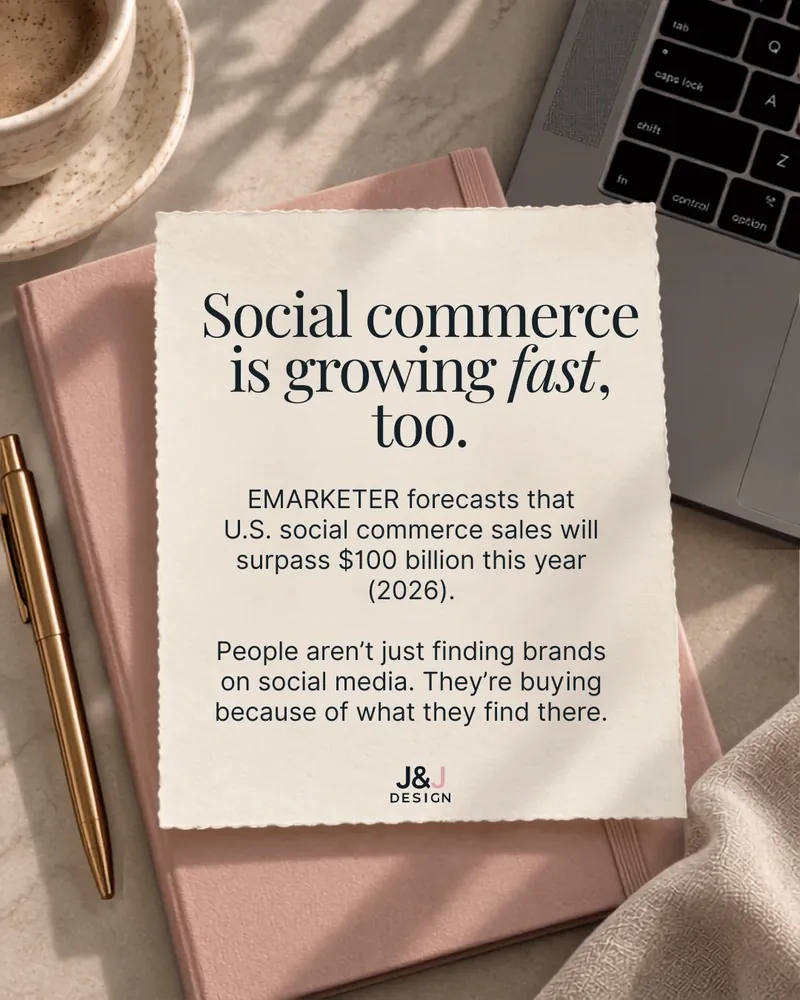
Note card: social commerce is growing fast. EMARKETER forecasts U.S. social commerce sales will surpass $100 billion in 2026.
Slide 5 of 8

Social commerce is growing fast

EMARKETER forecasts that U.S. social commerce sales will surpass $100 billion in 2026.

People aren't just finding brands on social media. They are buying because of what they find there, often without ever visiting a search engine first.

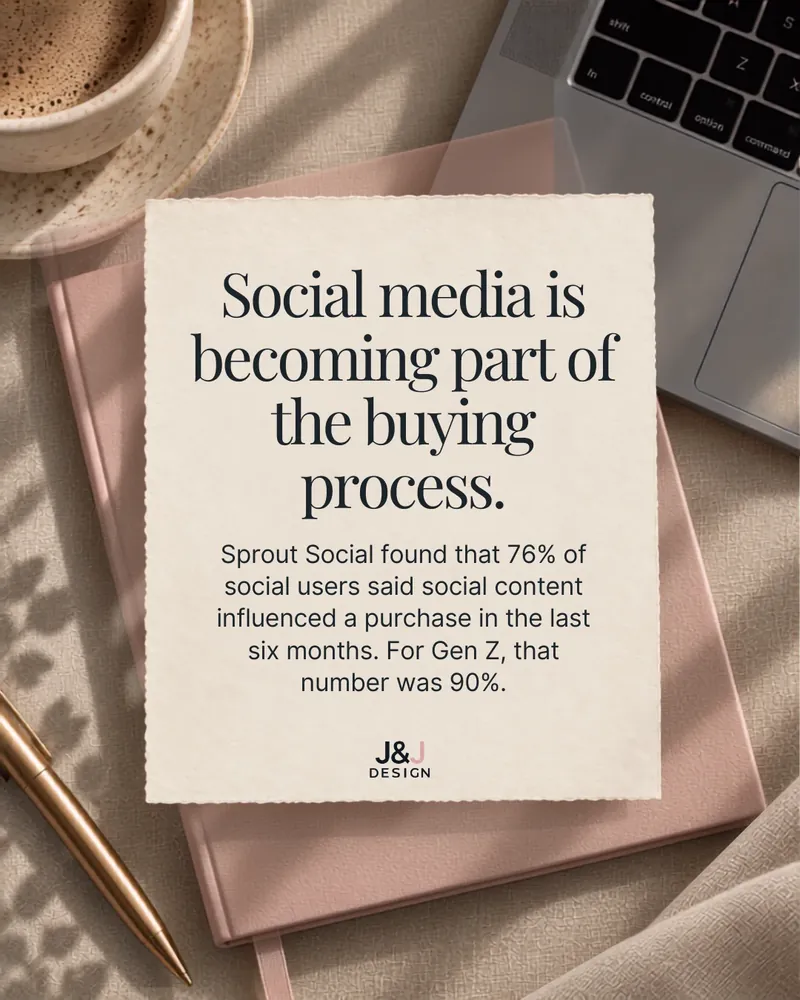
Note card: social media is becoming part of the buying process. Sprout Social found 76% of social users said social content influenced a purchase in the last six months; for Gen Z it was 90%.
Slide 6 of 8

Social media is becoming part of the buying process

Sprout Social found that 76% of social users said social content influenced a purchase in the last six months. For Gen Z, that number was 90%.

Even for a local service business that never sells anything online, that influence is real. The plumber, salon or restaurant with an active, professional feed is the one that feels like the safe choice.

Note card: social media is no longer just a place people go to scroll. It's where they discover brands, research products, compare options, build trust and decide who feels worth buying from.
Slide 7 of 8

No longer just a place people go to scroll

It is where they discover brands, research products, compare options, build trust and decide who feels worth buying from. Social media now does the job that a shop window, a word-of-mouth referral and a review site used to do separately.

It works best alongside a strong website. Social media reaches new people, and your website is where that attention turns into a call, a booking or a quote request.

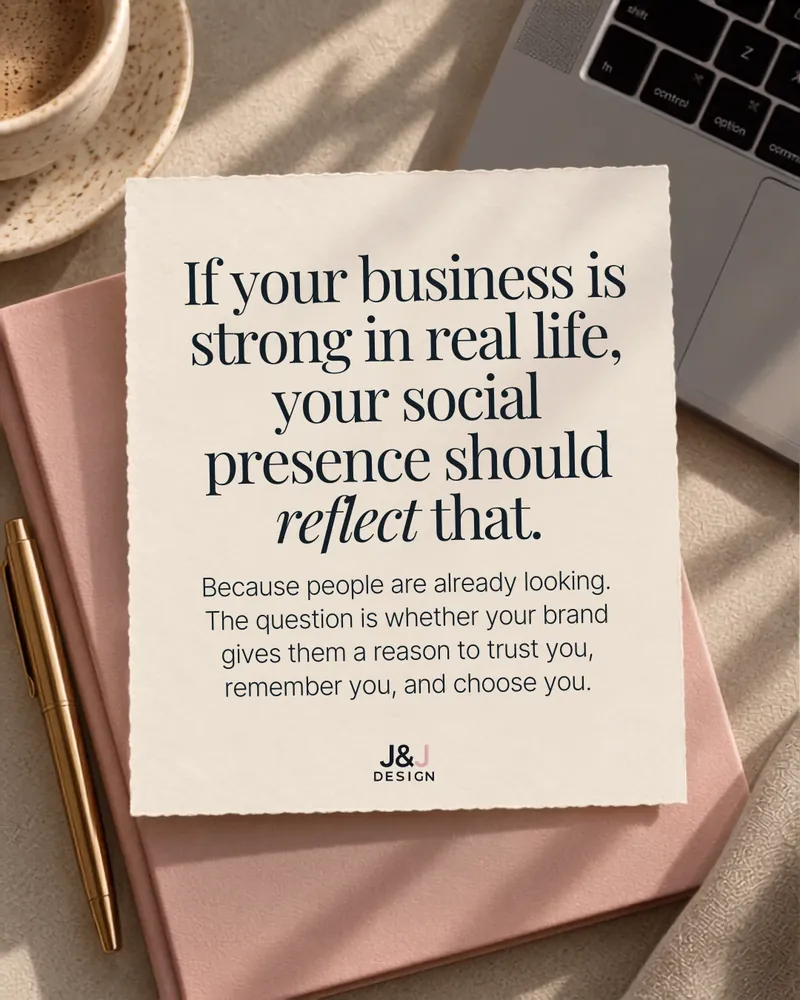
Note card: if your business is strong in real life, your social presence should reflect that. People are already looking; the question is whether your brand gives them a reason to trust you, remember you and choose you.
Slide 8 of 8

If your business is strong in real life, your social presence should reflect that

Because people are already looking. The question is whether your brand gives them a reason to trust you, remember you and choose you.

That is often the gap we see: a business with loyal customers and great work, and a feed that looks nothing like it. For an example of turning what is already great about a business into a consistent brand, read our Callister's Country Kitchen case study.

Sources

Figures as cited on our carousel slides: worldwide and U.S. social media user identity counts (U.S. figure as of October 2025); Sprout Social research on social search behaviour and purchase influence; and EMARKETER's forecast for 2026 U.S. social commerce sales. The “Rule of 7” is a marketing rule of thumb rather than a single study.

The short version

What the numbers really say.

  1. Your customers are already on social media: roughly 7 in 10 people worldwide.
  2. Social is a search engine now. People look you up there before they ever reach out.
  3. Consistency beats volume. Recognition builds with every on-brand post, not with one viral one.
Keep reading

More straight talk from our feed.

Ready to be seen?

Social content that looks like your business.

Branded graphics, captions and content planning that keep you visible and send people back to your website. One campaign or ongoing monthly content.